
Time: 2026-08-27 Click: 85 seen
In rice processing plants, steam boilers are essential equipment and serve as the core of the entire production system’s stable operation. They provide a steady, uninterrupted supply of steam for processes such as parboiled rice production, rice cooking, drying, and heating. Therefore, steam boilers are crucial to the overall operation of rice processing plants.
This article will provide an in-depth overview of the specific applications of steam boilers in rice processing, offering valuable information to rice processing enterprises regarding boiler selection and application.
Boilers play a crucial role in the paddy rice steaming process. During the soaking and steaming stages, high-temperature steam is introduced to the paddy rice, causing the starch to gelatinize, preserving nutritional value, and improving the milling yield, thereby making the finished rice more competitive in the market.
After steaming or soaking, the paddy must be dried. Steam generated by the boiler powers heat exchangers and drying equipment, safely removing excess moisture from the soaked or washed paddy, preventing spoilage and cracking, and maintaining the quality of the rice grains.
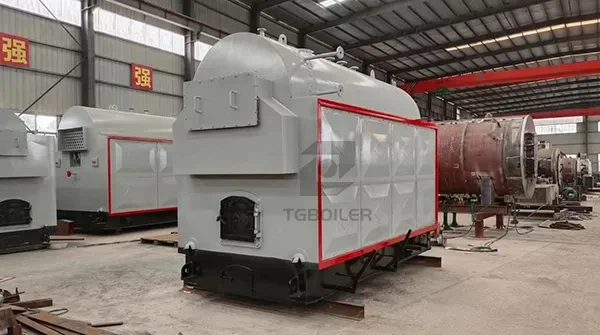
Steam also plays a vital role in the cleaning and polishing of rice.
During the cleaning stage, steam enables high-temperature cleaning of the rice, effectively removing impurities, microorganisms, and pesticide residues adhering to the surface of the grains, thereby improving the rice’s hygienic quality.
During the polishing stage, steam gelatinizes the starch on the surface of the rice grains, forming a glossy film that enhances the rice’s luster and makes it more translucent, thereby increasing its market value and competitiveness.
During rice processing, numerous pieces of equipment—such as rice hullers and threshers—require thermal energy to operate. The heat generated by boilers is transferred to these devices in the form of steam or hot water, providing the power needed for their operation and ensuring the continuous and stable operation of the entire production line. If a boiler malfunctions, it affects the entire processing process and may even result in significant economic losses. Therefore, a stable and reliable boiler energy supply is key to maintaining the efficient operation of a rice processing plant.
High-efficiency boiler systems play a vital role in enhancing the production efficiency and reliability of rice processing plants.
Advanced boilers have higher thermal efficiency and can convert fuel into thermal energy more effectively, thereby reducing energy waste. At the same time, high-efficiency boilers operate more stably, minimizing downtime caused by equipment failures. For example, boilers equipped with automated control systems can monitor operating parameters in real time and automatically adjust fuel supply and combustion conditions to ensure a stable steam output, thereby improving overall production efficiency and generating greater economic benefits for the enterprise.
A high-performance steam boiler helps rice mills maintain rice quality and increase output. It also helps reduce fuel consumption and ensures the production process runs smoothly. When a rice mill has a reliable boiler system, the entire production process becomes faster, more efficient, and easier to manage. Therefore, steam boilers are essential for rice processing plants.
TGBOILER offers robust and reliable steam boilers specifically designed for rice mills. Our boilers are engineered to provide a continuous and stable supply of steam for a wide range of rice processing activities.
Tel/Fax: + 86-371-6331 1291
WhatsApp/WeChat: 8613598899826
Email:info@taiguoboilers.com
Add: 13th Floor, Building B, Zhengshang Xuefu Square, No. 277 Boxue Road, Zhengdong New District, Zhengzhou, Henan, China




 8613598899826
 8613598899826
 info@taiguoboilers.com
