
Time: 2026-07-16 Click: 117 seen
The burner is the core combustion component of a gas boiler. Its primary function is to safely and efficiently convert fuel into thermal energy, thereby achieving high-efficiency heating and low emissions. A high-quality burner provides multiple layers of protection, including ignition failure protection, accidental flameout protection, high- and low-gas-pressure protection, combustion air pressure monitoring, and power failure protection. These functions work together to monitor the burner’s operation and ensure safety, thereby safeguarding the stability of industrial production.
Gas burners are equipped with an electric spark ignition system for fully automatic control. The ignition sequence is strictly controlled, with the ignition time typically limited to 2–5 seconds. If ignition is not successful within this timeframe, the system will immediately lock down to prevent uncontrolled gas release.
The system uses flame detectors (such as phototubes or ionization probes) to monitor the combustion status inside the furnace in real time. As soon as a signal indicating flameout is detected, the control system reacts within a very short time to cut off the gas supply.
When the burner starts, the system strictly follows the sequence of “programmed purge first, then ignition.” If, after the ignition action is executed, the flame detector does not detect a flame signal within the specified time, the burner will immediately enter a safety lockout state to prevent unburned gas from accumulating in the furnace.
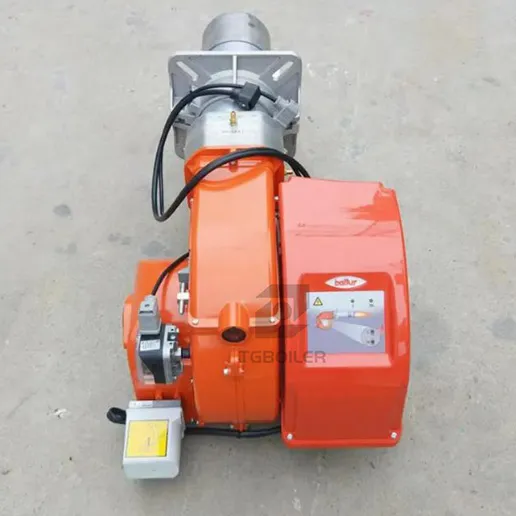
During normal boiler combustion, if the flame unexpectedly goes out due to fluctuations in the gas supply, impurities, or other causes, the flameout protection device will rapidly shut off the gas solenoid valve within 1 second and trigger an alarm, completely eliminating the risk of a furnace explosion caused by continued gas leakage.
Gas boiler burners must operate within a specific pressure range. If the gas pressure is too high or too low, the protection mechanism will be triggered, locking the burner to ensure equipment safety.
Safe combustion requires not only gas but also sufficient oxygen. This feature primarily monitors the air pressure of the combustion air fan. If the fan malfunctions, the air duct becomes blocked, or the airflow is insufficient, the air pressure switch will fail to close, preventing the burner from starting or causing an immediate emergency shutdown to prevent the production of high concentrations of carbon monoxide due to oxygen-deficient combustion.
If a sudden power outage occurs while the gas boiler burner is running, the burner will enter power-outage protection mode. The internal gas quick-shut-off valve (a normally closed solenoid valve) will close rapidly due to the loss of power, sealing off the gas passage. Even if power is subsequently restored, the burner will not restart automatically; the ignition procedure must be manually restarted to ensure absolute safety.
During burner operation, all safety features are inextricably linked, collectively forming a firewall for the safe operation of gas boilers. Therefore, when selecting a gas boiler, equipping it with a high-quality, highly sensitive burner and control system is of the utmost importance for ensuring industrial safety.
For inquiries regarding industrial burner for boiler, please contact:
Email: info@taiguoboilers.com WhatsApp: +86 13598899826
Tel/Fax: 0086 371 63311291
WhatsApp/WeChat: 0086 13598899826
Email:info@taiguoboilers.com
Add: No.6 Zone, North Side of Konggang No.6 Road, Airport Economy Zone, Zhengzhou City, Henan Province, China




 0086 13598899826
 0086 13598899826
 info@taiguoboilers.com
