
Time: 2025-10-23 Click: 857 seen
Selecting the appropriate boiler burner requires consideration of multiple factors, such as boiler type, fuel type, operational requirements, budget, and environmental standards. Refer to the following steps and
considerations to help you make the right choice:
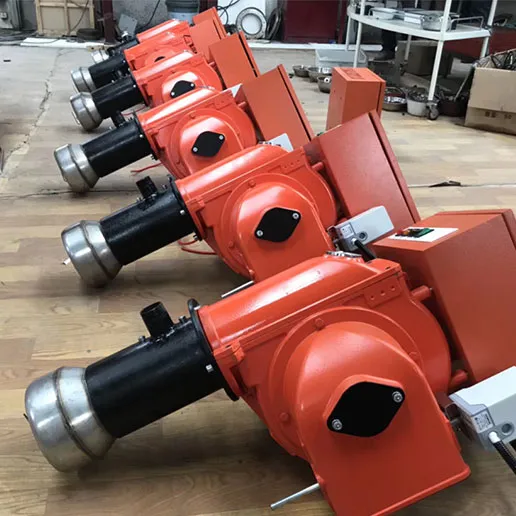
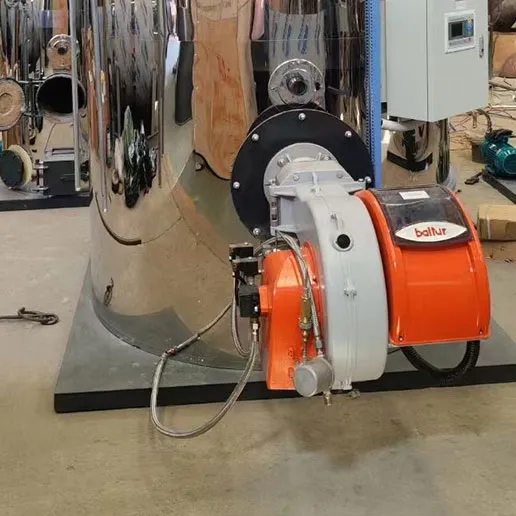
Boiler Type: Identify whether the boiler is a steam boiler, hot water boiler, or thermal oil boiler.
Boiler Capacity: Select a burner matching the boiler's rated capacity (kW or t/h).
Boiler Interface Dimensions: Ensure the burner's installation dimensions match the boiler's interface.
Natural Gas: Most common, low-cost option suitable for regions with abundant natural gas resources.
Liquefied Petroleum Gas (LPG): Suitable for areas without natural gas supply.
Fuel Oil (Light/Heavy Oil): Suitable for industrial areas without gas supply.
Dual-Fuel or Multi-Fuel: Capable of switching between fuels, suitable for areas with unstable fuel supply.
Biomass or Special Fuels: Suitable for coal, wood, and other bio-resource-rich areas, or projects/regions with higher environmental requirements.
Burner capacity must match boiler output, typically allowing ±10% fluctuation.
Turndown ratio indicates the maximum-to-minimum power ratio.
Selecting burners with higher turndown ratios (e.g., 5:1 or 10:1) enables efficient low-load operation and fuel savings.
Single-stage control: Only has on/off states, suitable for small boilers.
Two-stage control: Operates at high/low power, used for moderate load variations.
Proportional control: Automatically adjusts power based on demand, used in systems with significant load fluctuations.
Combustion Efficiency: Select burners with efficiency ≥90% to minimize fuel consumption.
Emissions Control: Verify compliance with local environmental regulations to reduce pollution.
Ensure comprehensive safety protection systems, including flame monitoring, over-temperature protection, and gas pressure safeguards.
Verify compatibility of burner safety functions with the boiler's overall safety system.
Installation Space: Ensure burner dimensions fit the boiler room's installation area.
Maintenance Accessibility: Select burners designed for easy maintenance, ensuring key components (e.g., nozzles, ignition electrodes) are readily replaceable.
After-Sales Service: Choose brands with robust after-sales support to guarantee timely technical assistance.
Initial Cost: Compare prices and models of different burners.
Operating Cost: Select high-efficiency burners to reduce long-term fuel consumption.
Maintenance Cost: Consider burner durability and maintenance frequency.
Consider burner brands to ensure reliable quality.
Review user feedback to understand actual performance.
If uncertain about selection, consult boiler manufacturers or specialized burner suppliers.
They will recommend suitable burners based on your specific requirements.
By following these steps, you can better select an appropriate boiler burner, ensuring efficient, safe, and environmentally responsible operation of your burner system.
For inquiries regarding boilers burner, please contact:
Contact: info@taiguoboilers.com WhatsApp: +86 13598899826
Tel/Fax: 0086 371 63311291
WhatsApp/WeChat: 0086 13598899826
Email:info@taiguoboilers.com
Add: No.6 Zone, North Side of Konggang No.6 Road, Airport Economy Zone, Zhengzhou City, Henan Province, China




 0086 13598899826
 0086 13598899826
 info@taiguoboilers.com
